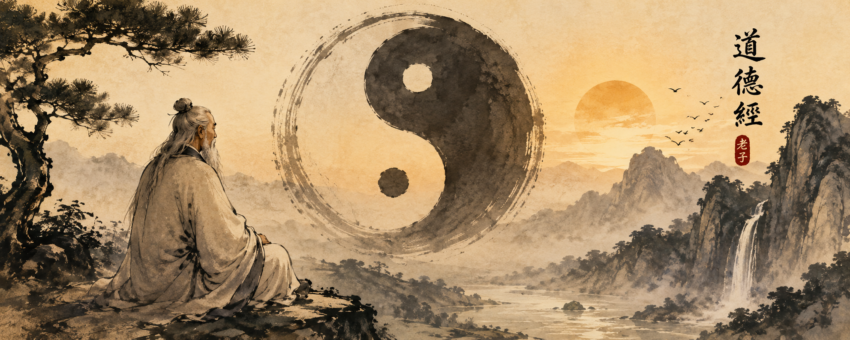
Book Title: Tao Te Ching by Lao Tzu
Author: Lao Tzu (Laozi, c. 6th century BC). Chinese philosopher. Archive keeper of Zhou court, legend says. Founder of Taoism. Name means “Old Master.”
Published: c. 4th century BC. Written in Warring States period. 81 short chapters.
Category: Philosophy, Taoism, Spirituality, Leadership, Classical Literature
Table of Contents
- 1. Book Basics
- 2. The Big Idea
- 3. The Core Argument
- 4. What I Liked
- 5. What I Questioned
- 6. One Image That Stuck
- 7. Key Insights
- 8. Action Steps
- 9. One Line to Remember
- 10. Who This Book Is For
- 11. Final Verdict
- 12. Deep Dive: Wu Wei and Effortless Action
- 13. Deep Dive: Leadership and the Sage Ruler
- 14. Deep Dive: Paradox and Reversal
- 15. Deep Dive: Comparison to Confucius
- 16. Final Reflection: The Uncarved Block
1. Book Basics
Why I picked it up:
Tao Te Ching is the core text of Taoism. It teaches how to live by not forcing. It teaches how to lead by not controlling. It teaches how to win by yielding.
Lao Tzu is a mystery. Tradition says he wrote the book at a border pass. A guard asked him to record his wisdom. He wrote 5000 characters. Then he left. No one saw him again. We do not know if he was one man. The ideas are what matter.
The book addresses the problem of action. Most people push. They grasp. They fight. They tire. The world resists them. States collapse. Lives burn out. Why? Because they act against the way things are.
The central thesis is this: The Tao is the way of nature. It does not strive. It still achieves. Water does not fight. It still wears down rock. The sage does not force. He still rules. Do less. Achieve more.
This book is different from Western texts. Plato uses reason. Sun Tzu uses strategy. Lao Tzu uses reversal. Strength is weakness. Weakness is strength. Full is empty. Empty is full. The words are plain. The meaning is deep.
Expect 81 chapters. Each is short. Some are four lines. The longest is twenty lines. The language is poetic. It repeats. It contradicts. It points, not explains. Read slow. Read again. It changes each time.
2. The Big Idea
The core premise is that the Tao cannot be named. The Tao that can be told is not the eternal Tao. The name that can be named is not the eternal name. The moment you define it, you lose it.
The problem is force. Rulers issue laws. More laws mean more thieves. People build weapons. Wars grow. Scholars make rules. Nature is lost. All effort to control creates its opposite.
The book offers a reframe. Do not act. The Chinese is wu wei . It means non action. It does not mean doing nothing. It means doing without forcing. It means acting in line with the Tao. When you plant, you do not pull the sprout. You water. You wait. That is wu wei .
Conventional wisdom says lead by strength. Be first. Be bright. Be hard. Lao Tzu says lead by weakness. Be last. Be dark. Be soft. The valley is low. All water flows to it. The valley rules without ruling.
The fundamental insight is that reversal is the movement of the Tao. Things turn into their opposite. What bends, stays whole. What is crooked, becomes straight. What is empty, becomes full. What is old, becomes new. Hold to the weak side. You win.
What changes:
Your view of power shifts. Power is not command. Power is alignment. You stop pushing. You start listening. You see that stillness acts.
This reframe affects choices. You ask, am I forcing this? You ask, what happens if I stop? You see that less law means more order. You see that quiet wins arguments.
This matters beyond self help. Leaders read it. States use it. Water flows downhill. It does not argue. It still reaches the sea. A ruler who does not meddle lets people grow. That is politics. That is parenting. That is life.
3. The Core Argument
Argument 1: The Tao is nameless and formless. It is the mother of all things. You cannot see it. You use it. It is empty. It is never used up. That is Chapter 1 and 4.
Argument 2: Non action governs best. The sage does not act. The people transform. He does not command. The people are in order. Laws multiply. Thieves multiply. Weapons multiply. Wars multiply. Do less. Chapter 3 and 57.
Argument 3: Weak overcomes strong. Water is soft. It wears away rock. The female overcomes the male by stillness. The low overcomes the high. Be like water. Chapter 78 and 61.
Argument 4: Reversal is the way. Return is the movement of the Tao. Yielding is the method. Things expand, then shrink. Rise, then fall. Know the cycle. Do not fight it. Chapter 40.
Argument 5: The sage is last, so he is first. He does not compete. No one competes with him. He puts himself behind. He ends up ahead. He is outside the self. His self lasts. Chapter 7 and 66.
Argument 6: Know when to stop. Fill a cup to the brim. It spills. Sharpen a blade too much. It dulls. Chase wealth. You cannot keep it. Know enough. Stop. No danger. Chapter 9 and 44.
Argument 7: The best ruler is unknown. Next best is loved. Next is feared. Worst is despised. When the work is done, people say, we did it ourselves. That is the highest skill. Chapter 17.
Argument 8: Desires confuse. No desire, see the mystery. Desire, see the form. The sage empties the mind. He fills the belly. He weakens ambition. He strengthens bone. Chapter 1 and 3.
Argument 9: Violence rebounds. Weapons are tools of ill omen. The sage uses them only when forced. He wins but does not glorify. Victory is a funeral. Mourn the dead. Chapter 31.
Argument 10: The Tao is in the low places. Great rivers and seas rule because they are low. All streams flow to them. The sage is low. The world goes to him. He does not contend. Chapter 66.
4. What I Liked
Strength 1: The book is short. 81 chapters. 5000 characters. You can read it in one sitting. You can study it for years. It respects your time.
Strength 2: It uses nature. Water. Valley. Bellows. Uncarved wood. The images are plain. They stick. You can see them. You can test them.
Strength 3: It trusts the reader. Lao Tzu does not argue. He states. He contradicts. He leaves space. You must work. That work changes you.
Strength 4: It speaks to leaders. It is not escape. It is rule. Chapters tell kings how to act. Do not meddle. Do not war. Do not tax. The people will thrive.
Strength 5: It balances. It does not say never act. It says act without forcing. It does not say never fight. It says fight only when forced. It is not passive. It is precise.
Strength 6: It lasts. 2500 years old. Still printed. Still read. CEOs, monks, and poets use it. Few books keep power that long.
5. What I Questioned
Limitation 1: The book is vague. What is wu wei ? When do I act? When do I stop? The text does not say. You must decide. That opens misuse.
Limitation 2: It can justify passivity. A bad ruler can quote it. He can do nothing and call it Tao. The book warns against this. Few listen. Quiet can be neglect.
Limitation 3: It distrusts knowledge. Chapter 18 says when the great Tao is lost, we get benevolence and righteousness. When wisdom appears, we get hypocrisy. That attacks learning. It risks ignorance.
Limitation 4: It is for kings. Many chapters speak to rulers. The sage is often a king. What if you have no power? The advice is hard to use. You must adapt.
Limitation 5: Translation changes all. The Chinese is terse. Tao means way, path, or doctrine. Te means virtue or power. Wu wei means non action or effortless action. English picks one. You lose the rest. Read three versions.
Limitation 6: It contradicts itself. Do nothing. Then work. Be weak. Then be strong like water. The paradox is the point. But beginners get lost. They pick one side.
6. One Image That Stuck
Water
Lao Tzu returns to water. Chapter 8 says the best are like water. Water benefits all things. It does not compete. It stays in low places that men dislike. So it is near the Tao.
Chapter 78 says nothing is softer than water. Yet nothing beats it for wearing away the hard. The weak overcomes the strong. The soft overcomes the rigid. Everyone knows it. No one practices it.
The image works because water is everywhere. It yields. You push it. It splits. It reforms. It takes any shape. It flows downhill without effort. It wears down rock without anger. It gives life. It asks nothing.
Lao Tzu uses this in many chapters. The valley is female. The valley receives. The river rules by being low. The ocean takes all streams. The image is one, but the uses are many.
This image reframes the book’s insight. Force fails. Yielding wins. You do not need to break the rock. Be water. Go around. Undercut. Wait. The rock becomes sand. Time is on water’s side.
The image teaches without law. Watch a stream. You learn strategy. Watch the sea. You learn power. No book needed after that.
7. Key Insights
- The name is not the thing. You can name love. You do not capture it. You can name the Tao. You lose it. Stop naming. Start seeing. Chapter 1.
- Do nothing, leave nothing undone. Wu wei does not mean lazy. It means act without friction. The farmer does not pull sprouts. He weeds. He waters. The crop grows. Chapter 48.
- Thirty spokes share one hub. The wheel works because of the hole. Clay makes a pot. Use comes from emptiness. Rooms work because of doors. Value is in what is not there. Chapter 11.
- Know the male, hold to the female. Be the stream of the world. Know white, hold to black. Be the valley. Know glory, hold to disgrace. Be humble. Then power comes. Chapter 28.
- The best fighter does not anger. The best winner does not engage. The best leader serves. This is the virtue of not contending. This is matching heaven. Chapter 68.
- A journey of a thousand miles begins with one step. Big things start small. Act on what is not yet. Order things before they exist. A tree grows from a shoot. A tower from earth. Chapter 64.
- He who knows does not speak. He who speaks does not know. Close the mouth. Shut the doors. Blunt the sharp. Untangle knots. This is mystic unity. Chapter 56.
- When the work is done, withdraw. That is heaven’s way. Fill the cup, it spills. Sharpen too much, it dulls. Take credit, you fall. Do the task. Step back. Chapter 9.
- No greater sin than desire. No greater curse than not enough. No greater flaw than wanting more. Know enough. You are rich. Chapter 46.
- The softest thing overcomes the hardest. Non being enters where there is no space. So I know the value of non action. Teaching without words. Work without action. Few understand. Chapter 43.
8. Action Steps
Start: Practice water once a day. Use when: You face resistance. The Practice:
- Name the obstacle.
- Ask, can I go around?
- Ask, can I go under?
- Ask, can I wait?
- Pick the path with least force. Why it works: Water does not argue with rock. It moves. You save energy. The obstacle erodes.
Stop: Naming too soon. Use when: You judge a person or event. The Practice:
- Catch the label. Good. Bad. Smart. Stupid.
- Say, I do not know the whole.
- Watch for one day.
- Act only on what is needed. Why it works: Names fix things. The Tao moves. Labels blind you. Open eyes see more.
Try for 81 Days: One chapter a day. Use when: You want to change your pace. The Practice: Day 1 to 81: Read one chapter each morning. Do not analyze. Read. Pick one line. Carry it. At night, ask, where did I force today? Where did I flow? Why it works: The book is short. Repetition carves. You become water by habit. What you’ll notice by day 81: You pause before pushing. You see the low path. You feel less tired.
9. One Line to Remember
“The Tao that can be told is not the eternal Tao.”
Or: “Do nothing, and leave nothing undone.”
Or: “The highest good is like water.”
10. Who This Book Is For
Good for: Leaders, parents, and creators. People tired of force. Anyone who feels burned out. Those who want peace without retreat.
Even better for: People in power. Managers. Rulers. Those who must act but want to act less. Artists who block. Fighters who rage. The book cools.
Skip or read critically if: You want steps and plans. You want science. You need proof. You dislike paradox. Read it as poetry, not manual, if that is you.
11. Final Verdict
Tao Te Ching is a book of reversals. Its greatest strength is simplicity. Few words. Many uses. It tells you to stop. In stopping, you win.
Its greatest limitation is emptiness. It tells you what not to do. It says less on what to do. You must fill the gap. Some fill it wrong.
The book accomplishes this: It shows another way. Not force. Not law. Not knowledge. Way. It gives images. Water. Valley. Wood. You can touch them.
It does not accomplish this: It does not give a system. It does not name steps. It does not promise results. It promises fit. You fit the world. The world fits you.
You will benefit most if you read it slow. You will lose if you read it once.
The lasting impact is this: After Lao Tzu, you cannot unsee force. You see it in laws. You see it in talk. You see it in yourself. The book gives you a choice. Push. Or flow. The book delivers on its promise. It points to the way. You must walk it.
12. Deep Dive: Wu Wei and Effortless Action
What Wu Wei Is Not
Wu wei is not lazy. It is not passivity. It is not giving up. The character wu means no. Wei means action or effort. Together they mean no forced action. It means action that fits.
The sage does not sit still. He governs. He teaches. He fights when forced. But he does not strain. He does not overreach. He does not act from ego. He acts from the situation.
Examples in the Text
The butcher in Chuang Tzu. Later Taoist text, but same idea. He cuts oxen for years. His knife never dulls. He follows the grain. He does not hack. He finds spaces. That is wu wei .
Water. It does not try to be wet. It does not try to flow. It flows. It does not try to be low. It is low. That is wu wei .
The valley. It does not pull streams. Streams come. It does not command. It receives. That is wu wei .
How to Practice
- See the grain. Before act, watch. Where is the opening? Where is the resistance? Do not hit resistance. Enter the opening.
- Lower the self. Ego pushes. It wants credit. It wants speed. Drop it. Ask, what does this moment want? Do that.
- Stop at enough. The cup is full. Stop pouring. The work is done. Step back. More effort ruins it.
- Trust the cycle. Things rise. Things fall. Do not hold the rise. Do not fear the fall. Plant in spring. Rest in winter.
Modern Use
A manager uses wu wei when he hires well and stops micromanaging. The team runs. A writer uses it when she stops forcing words and walks. The sentence comes. A fighter uses it when he does not block hard. He yields, then throws.
Wu wei is not magic. It is skill plus timing plus ego loss. You train. Then you let go. The action happens.
13. Deep Dive: Leadership and the Sage Ruler
The Best Ruler
Chapter 17 ranks rulers. Best: people do not know he exists. Next: they love him. Next: they fear him. Worst: they despise him.
The best ruler does not talk. He does not show off. He completes the work. The people say, we did it ourselves. That is wu wei in politics.
Tools of the Sage
1. Do not value rare goods. When gold is high, thieves rise. When titles are high, envy rises. Lower the prize. Peace rises. Chapter 3.
2. Empty minds, fill bellies. Weaken ambition. Strengthen bones. People with no desires do not rebel. This sounds harsh. The point is to reduce craving, not thought. Chapter 3.
3. Do not act. The sage does not meddle. He does not make laws each day. He does not start wars. The people order themselves. Chapter 57.
4. Be like water. Stay low. Do not compete. All streams come to you. You command without command. Chapter 66.
5. Use the female. The female overcomes by stillness. The state that is low wins the state that is high. Yield to larger states. They will come to you. Chapter 61.
Limits
This rule fits a small state. Lao Tzu lived in a time of many states. It fits a village. It fits a team. It may not fit an empire. An empire cannot be unknown. Yet the principle holds. Less control can mean more order. Too much law means less trust.
A leader today can test it. Remove one rule. See what happens. Speak less in meetings. See who talks. Give credit away. See loyalty rise. The book is old. The test is new.
14. Deep Dive: Paradox and Reversal
Why the Book Contradicts
The Tao moves by reversal. To go forward, go back. To be strong, be weak. To be full, be empty. The book must contradict. If it did not, it would lie.
Chapter 22 says: Be bent, and you stay straight. Be empty, and you stay full. Be worn, and you stay new. Have little, and gain. Have much, and be confused.
Key Reversals
High and low. The high is unsafe. The low is safe. Water seeks low. It rules. Hard and soft. The hard breaks. The soft lives. Teeth fall. Tongue stays. Chapter 76. Fast and slow. Rush, and you arrive late. Slow, and you arrive early. Wu wei is slow. It wins. Bright and dark. The wise are dull. The bright are blind. Know the white. Hold to the black. Chapter 28. Life and death. Live fully, you die soon. Live plain, you last. The stiff are disciples of death. The soft are disciples of life. Chapter 76.
How to Read Paradox
Do not pick a side. Hold both. Be strong and soft. Act and not act. Speak and be silent. The moment tells you which. The Tao is the circle. You stand at the center. You turn as needed.
This is hard for the mind. The mind wants one rule. The book breaks the mind. After it breaks, you see. That is the goal.
15. Deep Dive: Comparison to Confucius
Key Differences
Lao Tzu: The Tao is natural. Leave people alone. No laws. No rites. No learning. People return to plain wood. Society heals.
Confucius: The Tao is moral. Teach people. Use rites. Use learning. Use law. People become good. Society orders.
Lao Tzu: The sage is hidden. He is like water. He does not teach. Confucius: The sage is a model. He teaches. He names. He corrects.
Lao Tzu: When the great Tao is lost, we get benevolence. When benevolence is lost, we get righteousness. When righteousness is lost, we get rite. Rite is the husk of faith. Chapter 38. Confucius: Rite is the shell of virtue. Keep it. It shapes the heart.
Lao Tzu: Best ruler is unknown. Confucius: Best ruler is virtuous. People see him. They copy him.
Which to Use When
Use Lao Tzu when rules fail. Use him when force fails. Use him when you are tired. He returns you to root.
Use Confucius when chaos rules. Use him when no one knows roles. He builds form. He teaches duty.
A state needs both. Too much Confucius, and you get rigid law. Too much Lao Tzu, and you get decay. The Han dynasty mixed them. It lasted. The balance is the way.
16. Final Reflection: The Uncarved Block
Lao Tzu returns to one image. Pu . The uncarved block. Plain wood. It is simple. It has no use. Yet all uses come from it. Carve it, you make tools. Each tool is limited. The block is not.
Chapter 28 says: Know the white, hold to the black. Be the pattern of the world. Be the pattern, and virtue does not leave. You return to the uncarved block.
The overarching theme is return. You go out. You learn. You gain. You carve. You become a thing. The thing breaks. Return to the block. Start again.
The book’s contribution is permission. You may stop. You may be plain. You may not know. The world says achieve. The book says be. Achievement follows being.
The balance is this. The book controls nothing. It points. You control your grip. Hold tight, you lose the Tao. Hold loose, you keep it.
The deeper lesson is about home. Not the house. Not the state. The home inside. The uncarved block. You were it once. You can be it again.
A memorable closing thought: The last line of the book says it. The way of heaven benefits and does not harm. The way of the sage acts and does not compete. That is the end. No force. No fight. Just way.