Diogenes Laertius makes an argument by the structure of his book that most readers miss entirely.
He does not separate the lives of the philosophers from their doctrines. He presents them together — deliberately, consistently, across every entry — because his implicit claim is that the two cannot be separated without distorting both. The life is not biographical context for the philosophy. The life is the philosophy’s first and most honest test.
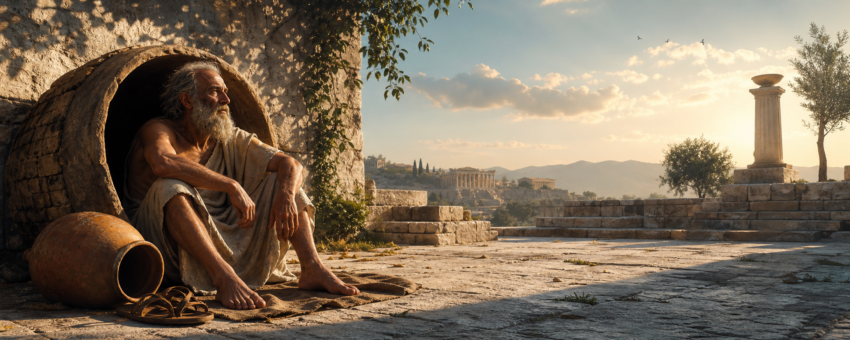
Socrates arguing for courage while facing execution without flinching is not an inspiring story attached to a philosophical position. It is the philosophical position demonstrated under the conditions that make demonstration meaningful. Diogenes the Cynic living in a barrel, owning nothing, answering Alexander the Great’s offer of any gift he desired with the request to stop blocking his sunlight — is not an eccentric anecdote. It is a philosophical argument about sufficiency made in the most direct available language.