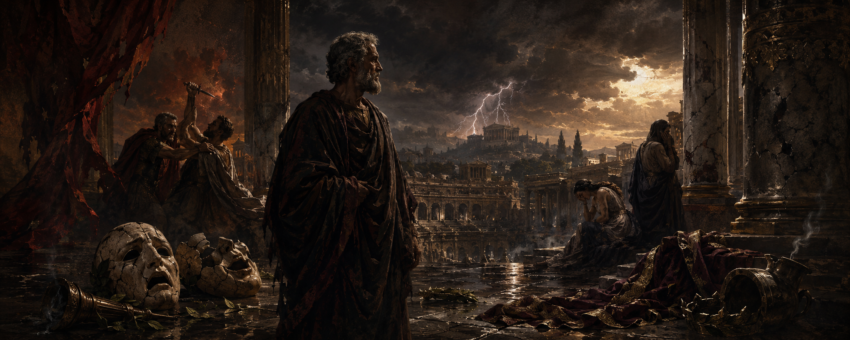
The Tragedies Are Not Entertainment — They Are Philosophical Argument Through the Demonstration of What Happens When Reason Fails
Seneca wrote philosophical treatises about how to govern the passions. He wrote the tragedies to show what happens when the passions are not governed.
The two bodies of work are not separate projects. They are the same project from opposite directions. The Letters and the essays prescribe. The tragedies demonstrate — through the most extreme available human situations — the specific catastrophes that follow when the Stoic disciplines are abandoned, when passion overrides reason, when the dichotomy of control is violated, and when the self is surrendered to forces it has the capacity but not the will to govern.
Medea does not kill her children because she is a monster. She kills them because she has surrendered entirely to passion — to rage, to injured pride, to the specific form of love that has inverted into destruction when its object withdrew. The tragedy is not a moral tale about a bad person. It is a clinical demonstration of what passion without reason produces when pushed to its logical extreme.
Thyestes does not merely suffer a horrific fate. He demonstrates the specific catastrophe of a man who has allowed ambition, resentment, and the desire for revenge to govern both himself and the people around him — until the system of passions produces the outcome that no single actor in the drama intended but that the logic of ungoverned passion made inevitable.